Planning & Budgeting
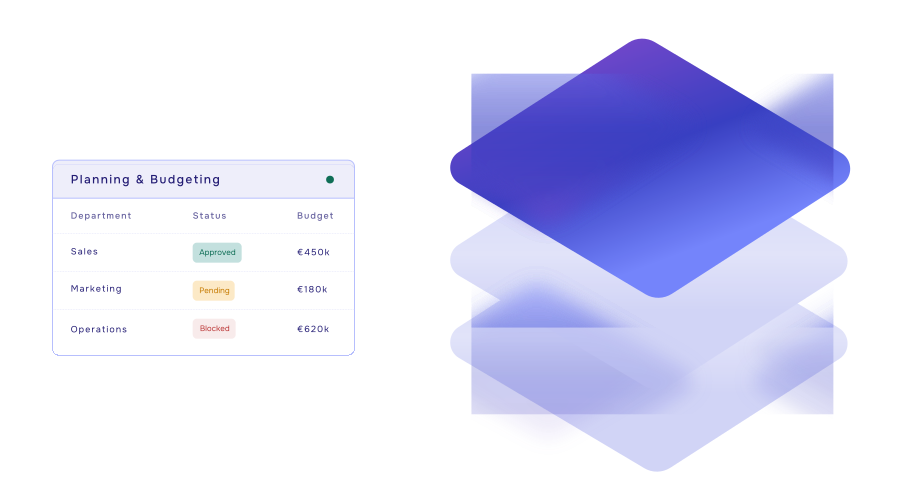
Translate strategic and operational objectives into financial plans and budgets. Allocate resources, establish guidelines, and create a cohesive financial plan for the organization.

Financial insights for an agile and future-proof organization.
Translate strategic and operational objectives into financial plans and budgets. Allocate resources, establish guidelines, and create a cohesive financial plan for the organization.
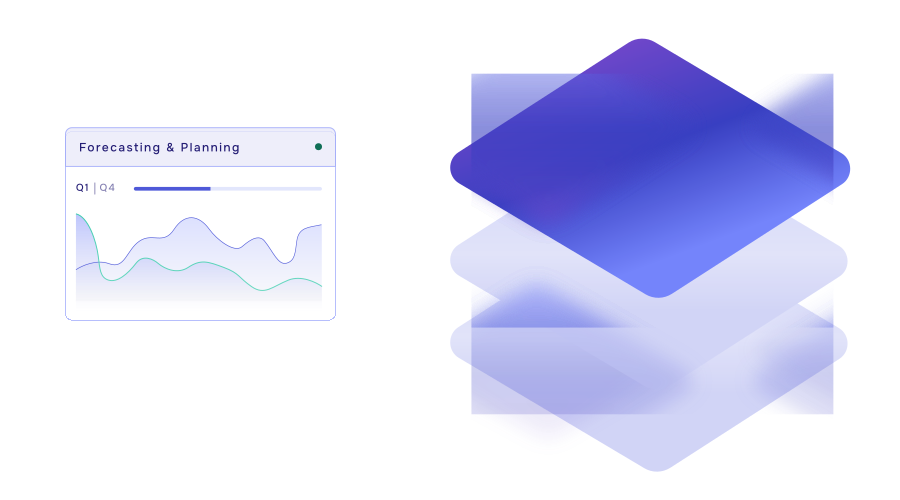
Update forecasts based on new results and developments. Run through various scenarios and illustrate how changes will affect revenue, costs, cash flow, and financial flexibility.
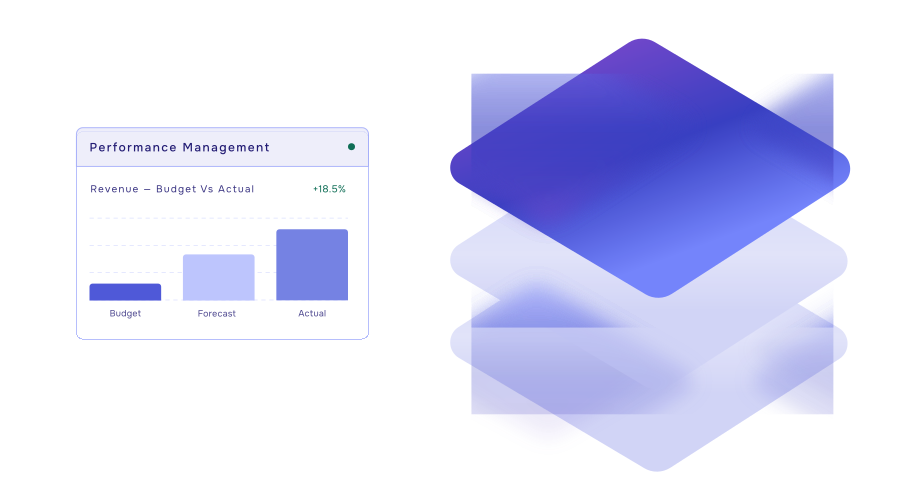
Compare results with budgets and forecasts, analyze variances, and track relevant KPIs. Report on performance and provide management with insight into where and when adjustments are needed.
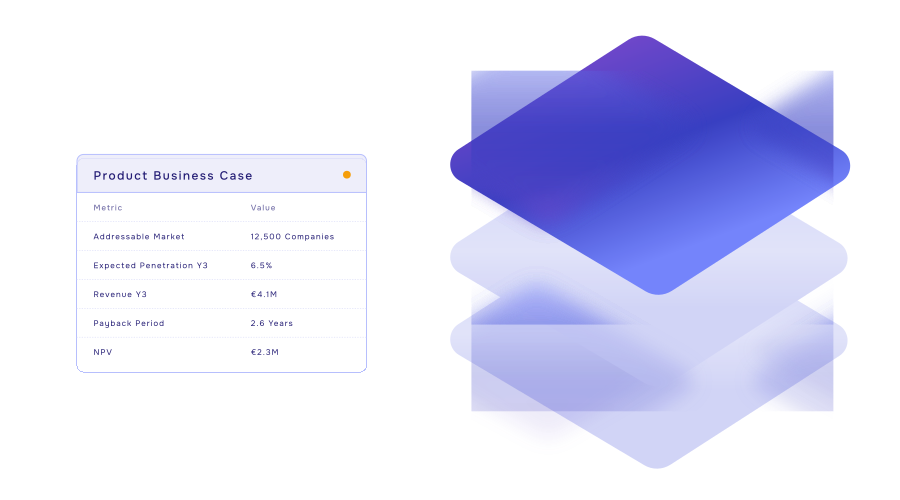
Support key decisions with financial analyses, business cases, and scenarios. Highlight which choices deliver the most value to the organization.
Translate strategic and operational objectives into financial plans and budgets. Allocate resources, establish guidelines, and create a cohesive financial plan for the organization.
Update forecasts based on new results and developments. Run through various scenarios and illustrate how changes will affect revenue, costs, cash flow, and financial flexibility.
Compare results with budgets and forecasts, analyze variances, and track relevant KPIs. Report on performance and provide management with insight into where and when adjustments are needed.
Support key decisions with financial analyses, business cases, and scenarios. Highlight which choices deliver the most value to the organization.
Spreadsheets are familiar and flexible.
Yet many organizations are running into limitations when it comes to financial planning and analysis: data is becoming more complex, and decision-making requires faster, more reliable insights.
FP&A software offers greater accuracy, better data integration, scalability, and deeper analysis. This helps organizations make more informed decisions and stay in control.
Webinar | 17 oktober
Webinar | October 7 – Practical AI applications for Accounts Payable and Accounts Receivable: from invoice processing to cash application.
Deterministic wherever possible. AI where interpretation is truly necessary.
Traditional automation follows predetermined instructions. AI also automates tasks that currently require human interpretation. Some applications:
From budgeting and forecasting to scenario analysis, performance management, and decision-making.
We developed a 30-year investment plan, including capital expenditures and loans. Based on HR data, we calculated the expected personnel costs at the end of the year. We also developed an energy tracking and forecasting system for the coming year. This gives the organization control over costs, resource allocation, and sustainability.
How do you plan investments 30 years in advance when you’re stuck using spreadsheets? The Zuiderzeeland Water Authority gained control of the future with FP&A. “The possibilities are endless.” Discover how comprehensive filtering techniques alone can change everything.

Plan, forecast, and manage using a single integrated financial model.
By linking data sources directly, standardizing definitions, and building in validations. This creates a single, consistent foundation for planning, forecasting, and analysis.
By placing models, workflows, and data processing at the center. Spreadsheets can continue to serve as a support tool, but should no longer be the primary source of processes and data.
A forecast is not a prediction with certainty, but a well-founded expectation. Its quality improves when current data, clear drivers, and multiple scenarios are combined.
Clear responsibilities, reliable data, and a cycle of continuous planning, analysis, and adjustment. Technology supports that process, but it does not replace ownership and financial insight.
Office of the CFO solutions that bring E-transactions, Purchase to Pay, Order to Cash, and Financial Planning & Analysis into flow.