
Switch to e-invoicing
No delays | No hassle | No worries




No delays
Incoming invoices are ready for approval in your system within seconds. And the invoices you send appear just as quickly on your customers' screens.

No hassle
Forget the hassle of uploading files, scanning documents, or manually retyping data. You no longer have to worry about different delivery channels or invoice formats.

No worries
Invoices are exchanged only with validated companies and everything is fully encrypted. In addition, you're also automatically compliant with current and upcoming regulatory requirements.

The link in all invoice flows
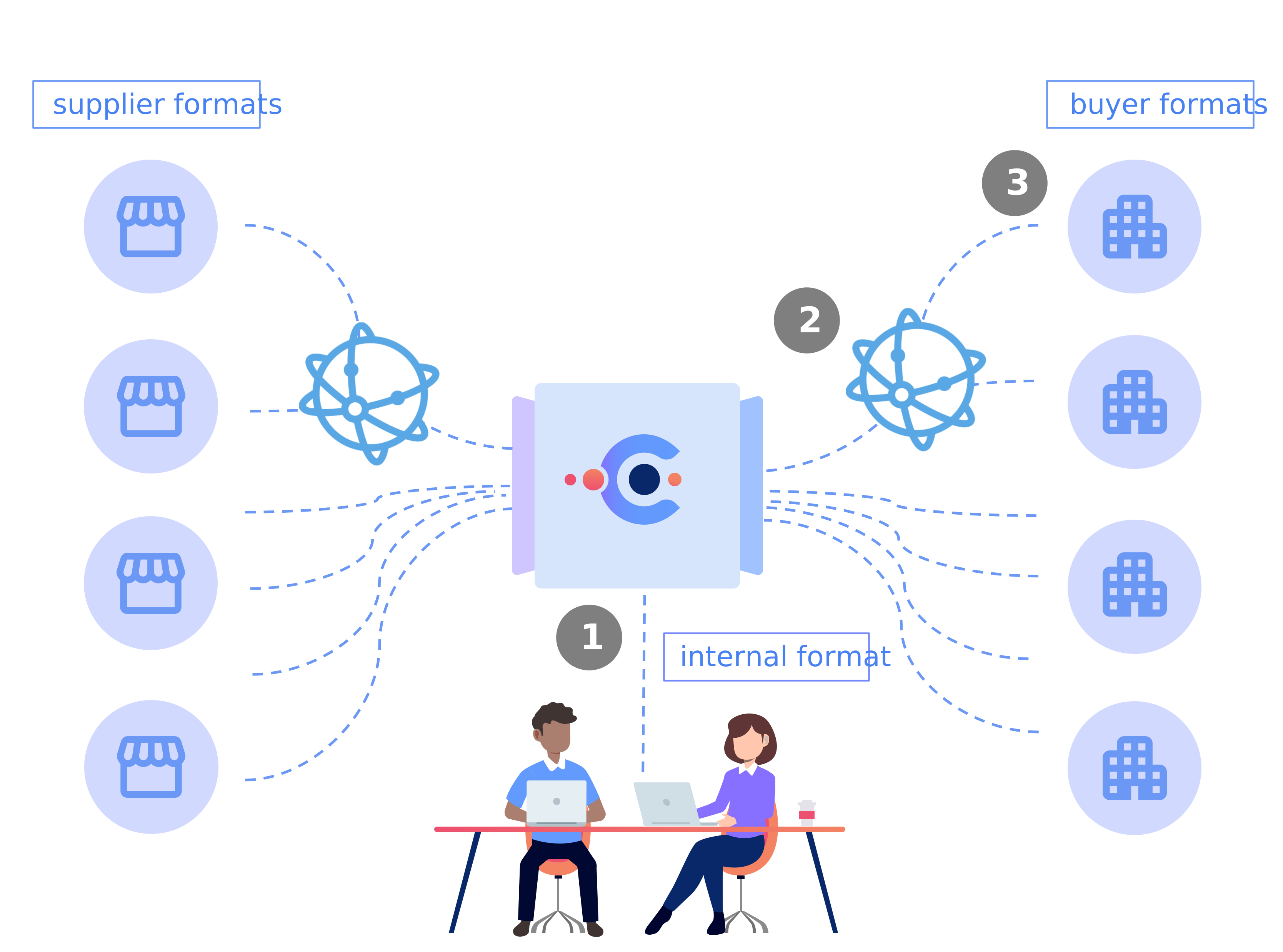
Many companies push e-invoicing forward because reconciliation with accounts payable and accounts receivable seems complicated. This leaves the cumbersome PDF flow. Our platform takes that coordination out of your hands: it centralizes invoice flows, automatically converts them to any format and ensures that the data are valid and comply with all applicable obligations.

Exchange
Any ERP or accounting system can capture invoice data in an XML file (the e-invoice). But instead of exchange via e-mail, we provide exchange of e-invoices between systems, via secure networks such as Peppol, Ariba, Pagero or Tungsten. The difference?
- Invoices are directly in the recipient's system within seconds.
- The exchange is encrypted and only possible for verified companies.

Peppol Network
Peppol is an e-transaction network that allows connected businesses to exchange invoices and other transactional documents or files. It's primarily used for B2B purposes. However, Peppol is increasingly being adopted by governments as the network for two key reasons: 1) It allows businesses to invoice public authorities for delivered services, and 2) Governments are starting to mandate real-time registration of intercompany invoices for VAT purposes. No surprise, then, that our e-invoicing platform integrates seamlessly with Peppol.

Conversion
Suppliers and customers can work with different e-invoice formats, such as UBL, iDOC, FacturaE, DICO, SETU, Energy eInvoice and UN/CEFACT. No problem. Our platform converts every invoice into the format preferred by the recipient.

Validation
Invoices can contain errors. It would be a shame if very basic errors are only discovered later in invoice processing. Our platform validates all invoice data against master data sources before delivering them to the recipient.

AI Inside
Not every supplier or customer is switching to XML right away. Sending and receiving PDF invoices via email is the standard for now. No problem: our platform converts every PDF to XML quickly and error-free with AI-driven conversion, down to header and line level. The other way around is also possible: we automatically generate a PDF from XML.





Compliance
Invoices are exchanged in accordance with applicable legislation and relevant standards, such as Ketenstandaard (DICO) within the construction sector, while invoices to the government in the Netherlands are sent in accordance with UBL, via the Peppol network. It is also increasingly required from the EU that all business invoices are registered with an accredited body in real time (ViDA).

Onboarding
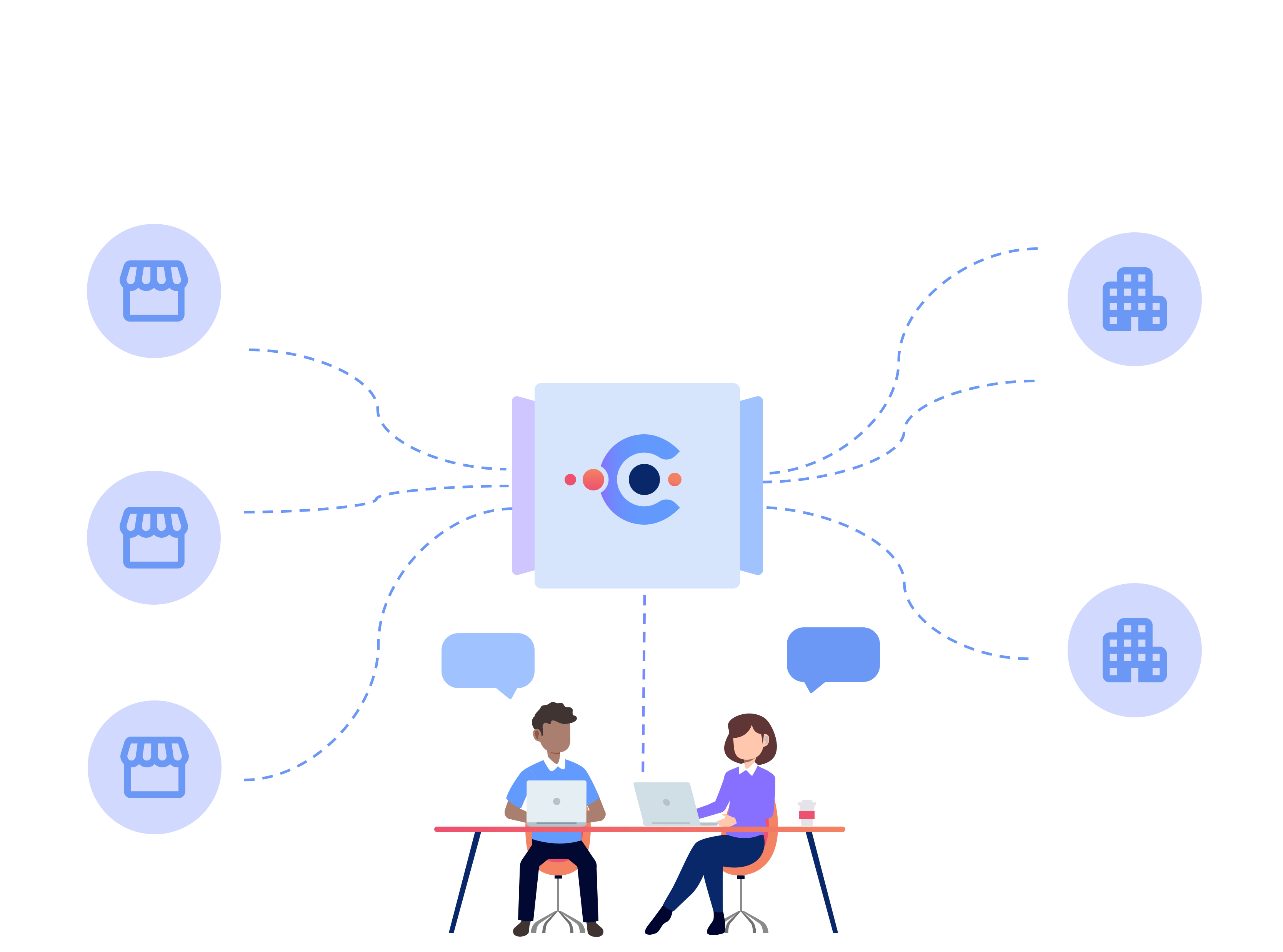
By running all incoming and outgoing invoice flows through our platform, your existing systems and workflows - as well as those of your suppliers and customers - can largely remain unchanged. That's where our strength lies. However, suppliers and customers must be informed in a timely manner about any changes in invoice address. For large customers, we also assess how they prefer to receive their invoices. This onboarding process is a joint effort.
Switch to e-invoicing
You wouldn't share a spreadsheet as a pdf, so why send an invoice that way?